AEO Insights From G2: What 248 Tools Reveal About AI Visibility and Where Content Still Wins
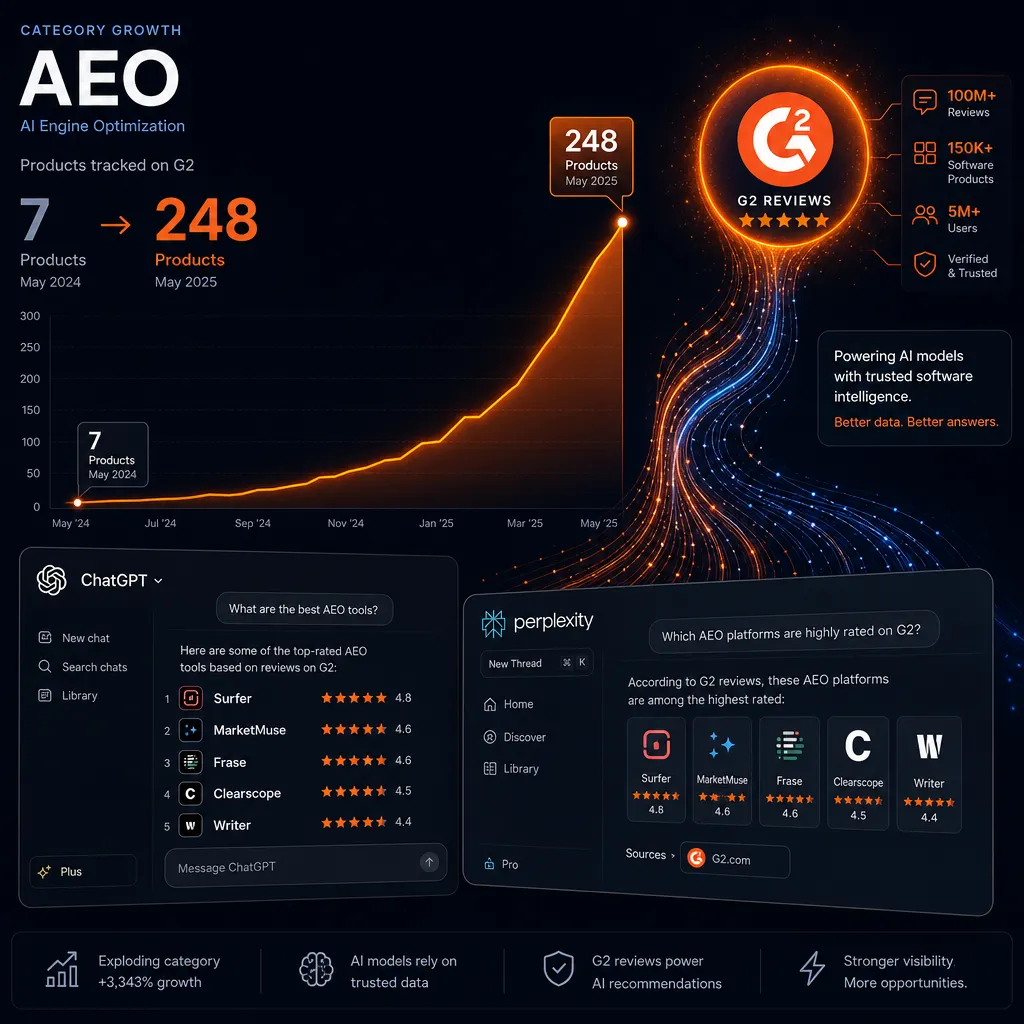
G2's AEO software category didn't exist before March 2025. Fourteen months later, it has 248 product listings and just received its second Grid Report.
That 2,000%+ growth rate isn't a marketing stat to skim past. It reflects something specific: brands across every B2B category are realizing that ranking on Google is no longer enough.
Half of B2B software buyers now start their research inside an AI chatbot. 51% of them use an AI chatbot. And when chatbots like ChatGPT or Perplexity recommend a product, it frequently pulls from G2.
The question isn't whether you need an AEO (answer engine optimization) strategy. It's what G2's own data tells us about where the current tools and the teams using them keep getting stuck.
G2 Is Part of the AEO Equation, Not Just a Place to Evaluate AEO Tools
Most teams think of G2 as a review platform. Smart teams treat it as an AI visibility input.
A Semrush study found G2 is among the top 20 most-cited domains across major LLMs. That means your G2 profile page, your comparison listings, and even the language your reviewers use are being read and cited by ChatGPT, Perplexity, and Gemini when they answer buyer questions.
This creates a feedback loop most brands miss. Your G2 presence shapes what AI says about you. What AI says about you shapes whether buyers even bother visiting your site. And your competitors' G2 data, such as their review volume, badge status, and reviewer language, gives AI models structured evidence to recommend them over you.
So when we talk about AEO insights from G2, we mean two things: what G2 review data reveals about the AEO tool market itself, and what G2 data can tell you about your own AI visibility gaps.
Both matter. But one of them is getting almost no attention.
The Three Patterns G2 AEO Insights Reviews Keep Surfacing
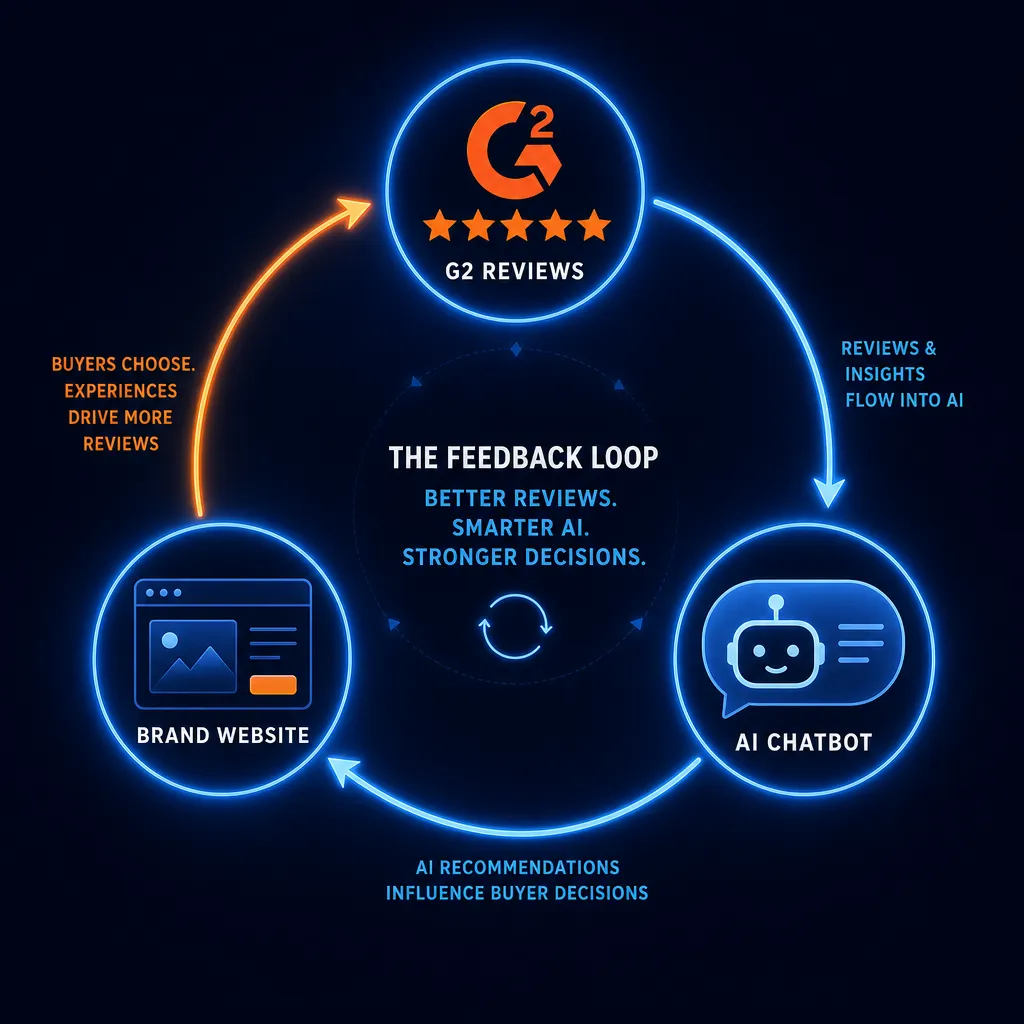 g2-aeo-insights-feedback-loop-by-aiseo.ai
After reading through G2 reviews across the AEO category, including both the 5-star endorsements and the 1-3 star complaints where the real signal lives, three patterns show up consistently.
Most AEO tools stop at the dashboard
This is the most cited frustration in the category. Users can see their visibility score dropped 15%. The tool shows them a chart. And then it leaves them alone with a CSV file.
The G2 review language is remarkably consistent: "I can see what's happening but I don't know what to change." The tools that score highest on G2's Spring 2026 Grid are the ones that connect data to action. But even among those, "action" usually means "here's a list of recommendations." Not "here's the content you need to publish."
The gap between a recommendation and a published piece of content is where most AEO programs stall. You'll see this described in G2 reviews as the "execution wall". It simply means that teams know what to fix but don't have the bandwidth or tools to fix it at the speed AI search requires.
Data freshness is a silent budget killer
AI models update their retrieval datasets constantly. Some do it hourly. But a surprising number of AEO tools in the G2 category still operate on weekly refresh cycles inherited from the SEO era.
The practical impact: by the time your dashboard shows a citation drop, the citation landscape has already shifted. You're optimizing for a snapshot that no longer exists. G2 reviewers flag this in the cons section, but it rarely shows up in the aggregate star rating because users don't discover the lag until months into their subscription.
If you're evaluating AEO tools on G2, filter for 1-3 star reviews and search for "data freshness," "update frequency," or "lag." That's where the honest assessments live.
"Multi-platform coverage" often means ChatGPT plus a footnote
Several AEO tools on G2 market themselves as tracking visibility across multiple AI platforms. G2 reviewers have started calling this out: deep coverage on ChatGPT, with thin or nonexistent tracking for Perplexity, Gemini, Claude, and DeepSeek.
This matters because each AI platform has different citation logic. A brand that's visible in ChatGPT answers may be completely absent from Perplexity. Research shows only about 30% of brands maintain consistent visibility across AI platforms. A tool that monitors one engine is measuring a fragment of the picture.
When you're reading G2 AEO reviews, check the cons (not the feature list) for platform coverage gaps. The feature page says "multi-platform." The 3-star review tells you what that actually means in practice.
What G2’s AEO Grid Tells You and What It Can’t
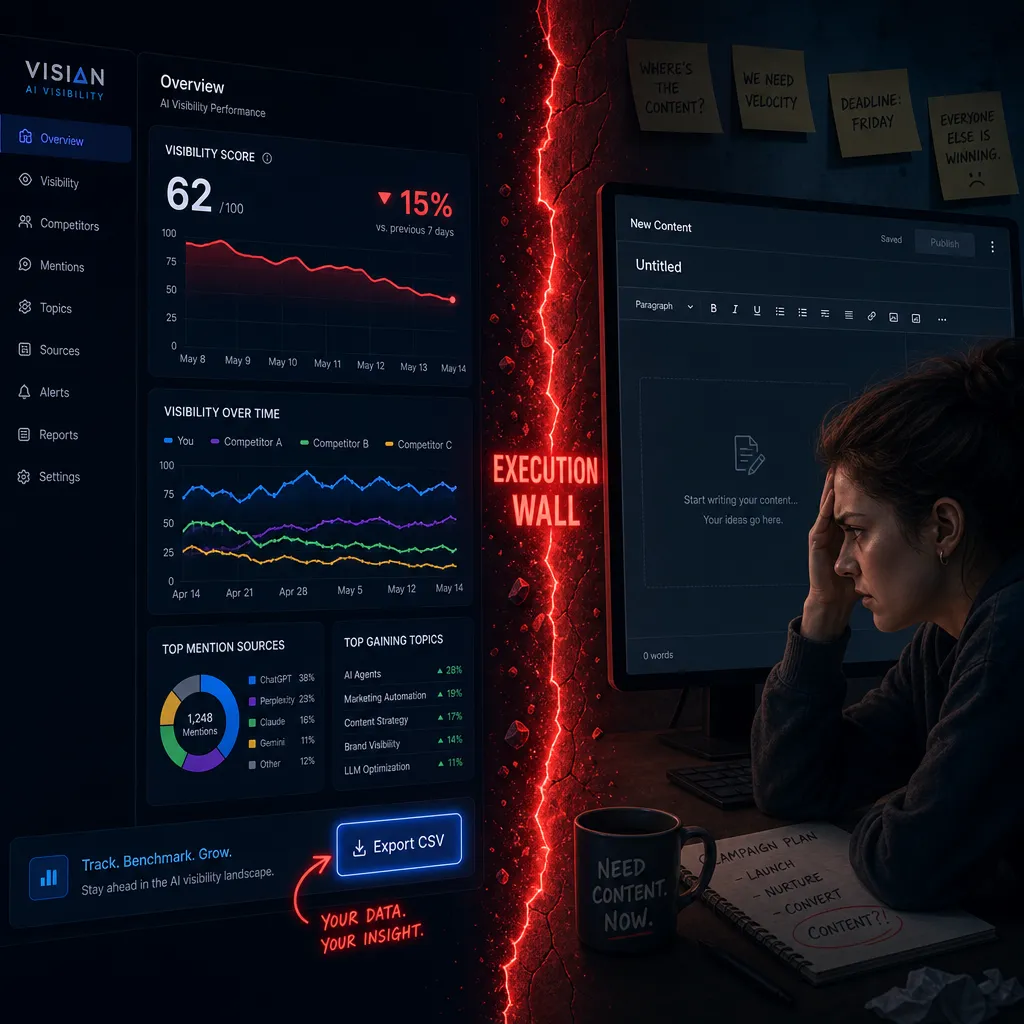 AEO-insights-g2-execution-wall-by-aiseo.ai
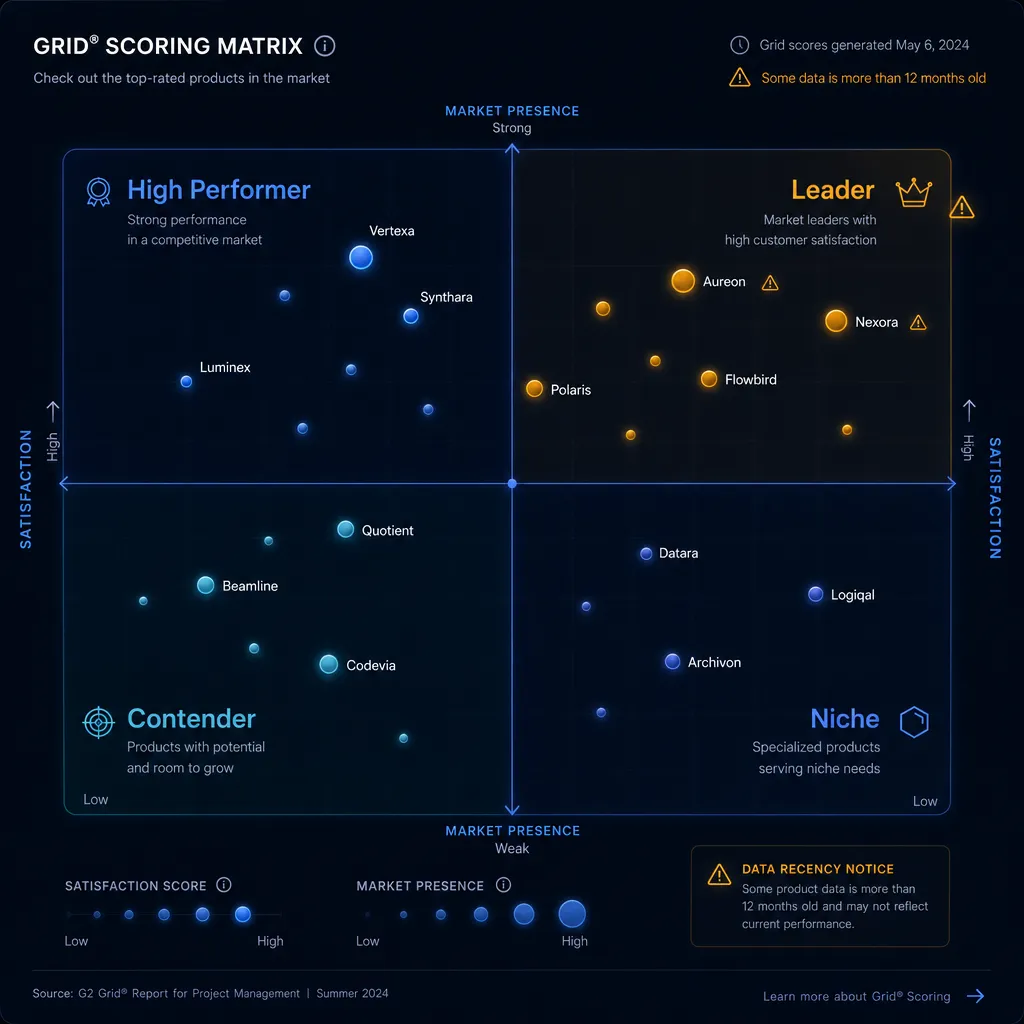
G2 published its first AEO Grid Report in Winter 2026, followed by a Spring 2026 update. The Grid places tools into Leader, High Performer, Contender, and Niche quadrants based on user satisfaction and market presence.
Here's what the Grid is good at: identifying which tools have real adoption, genuine user satisfaction, and enough review volume to be statistically meaningful. In a category with 248 listings and a lot of vapor, that filtering is valuable.
Here's what the Grid can't tell you: whether the tool's data collection method is accurate, whether it distinguishes between a brand "mention" and a genuine "recommendation," or whether it can actually help you close the visibility gaps it identifies.
G2's scoring weights ease of use, support quality, and likelihood to recommend. Those are valid for CRMs. For AEO, they create a proxy problem. You can have a beautifully designed dashboard that shows you stale data, and it'll score well on G2 because the onboarding was smooth and the support team responds fast.
Use the Grid as a starting filter. Read the reviews for technical depth. And treat the High Performer quadrant seriously. That’s because in a category this young, those tools often have stronger satisfaction signals than some Leaders.
The Execution Gap: Where AEO Tools Stop and Content Problems Start
 G2-aeo-insights-execution-gap-by-aiseo.ai
This is the part of the AEO conversation that almost nobody is having on G2.
Every AEO tool in the category does some version of the same thing: it monitors your brand's presence in AI-generated answers. Some do it well. Some do it poorly. But even the best monitoring tool has a fundamental limitation: it tells you where you're invisible. It doesn't make you visible.
Making you visible requires content. Specifically, it requires content that AI engines want to cite: well-structured, clearly written, information-dense, and above all, human-sounding.
AI platforms are increasingly deprioritizing content that reads like it was generated by AI. The irony of the AEO market is that many teams use AI writing tools to produce the very content that answer engines are learning to ignore. Generic, template-driven output that hits every SEO checkbox but reads like a committee wrote it doesn't get cited. It gets skipped.
The execution gap in AEO isn't a tooling problem. It's a content quality problem that no monitoring dashboard can solve.
How AISEO Bridges the Gap Between AEO Monitoring and Content Execution
 aiseo.ai-ranking-in-G2-AEO-insights
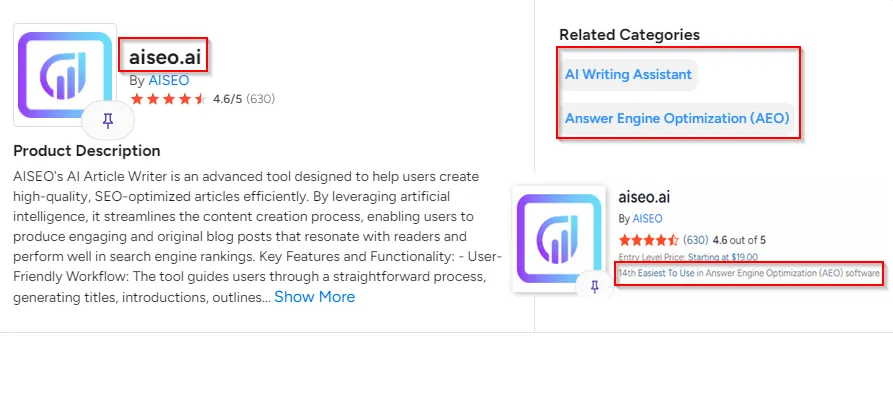
AISEO is one of the few tools listed on G2 under both the AI Writing Assistant category and the Answer Engine Optimization category. It carries a 4.6/5 rating across 630 reviews, which is one of the highest review counts in either category.
That dual listing isn't a marketing decision. It reflects what the tool actually does: AISEO sits at the intersection of content creation and AI search optimization.
Where a monitoring tool like Profound or Airefs shows you that ChatGPT isn't recommending your brand for a specific query, AISEO helps you create the content that changes that outcome. Three capabilities matter here:
AI article generation with SEO structure built in.
AISEO's article writer produces content that's optimized for both traditional search and AI citation. It includes heading hierarchy, keyword placement, and the kind of clear, direct answering format that AI engines prefer to cite.
Content humanization.
This is the capability that separates AISEO from generic AI writers. The humanize AI tool rewrites AI-generated content so it reads as if a person wrote it. That matters for AEO because answer engines are increasingly filtering out content that carries obvious AI fingerprints. If your content sounds like every other AI-generated blog post in your category, it won't get cited.
Speed at scale.
The execution wall in AEO isn't just about quality; it's about volume. When AISEO’s brand monitoring tool identifies 15 visibility gaps across three competitor categories, you need to produce 15 pieces of citation-worthy content. Doing that manually takes weeks. AISEO compresses that to hours.
The way to think about it: you need a monitoring tool to find the gaps. You need AISEO to close them.
How to Extract AEO Insights From Your Own G2 Data
 deriving actionable data from G2 aeo insights by aiseo.ai
The strategic value of G2 for AEO goes beyond evaluating tools. Your own G2 profile plus your competitors' profiles are active inputs into what AI says about your brand.
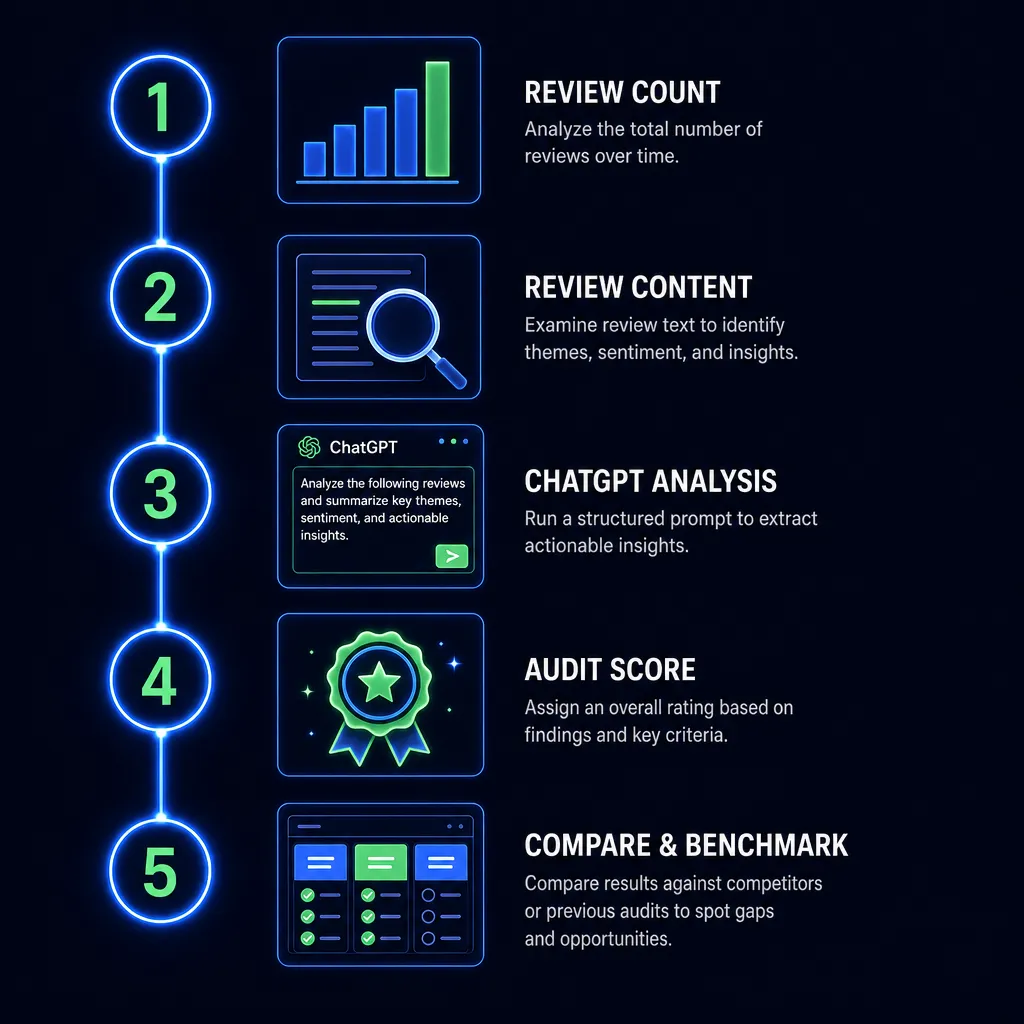
Here's a five-step audit you can run today.
Audit the review count gap.
Pull up your G2 profile and your top three competitors. Count the reviews. If there's a 10:1 gap, that's an AI signal problem, not merely a social proof problem. AI models weight evidence volume. A competitor with 500 reviews gives ChatGPT 10x more data points to draw on when it builds a recommendation.
Read competitor review text, not star ratings.
Reviewers describe products using the same language buyers type into ChatGPT. "Easy to set up without needing a developer" is both a G2 review phrase and a ChatGPT prompt. Extract the top 20-30 phrases from competitor reviews. Any phrase missing from your own G2 profile, site, or blog content is a visibility gap AI is filling with your competitor's name.
Run comparison prompts in ChatGPT.
Ask ChatGPT: "What are the pros and cons of [your product] vs [competitor]?" Then run the same prompt for your competitors against each other. Compare the language ChatGPT uses to the language in G2 reviews. The overlap is usually high and it shows you exactly which reviewer phrases are shaping AI perception of your brand.
Check G2 badge status.
G2 Leader, High Performer, and Momentum Leader badges create structured credibility signals that AI models weight. If your competitors hold badges and you don't, that gap feeds directly into AI recommendations. The fix isn't to game the system but to run a genuine review generation campaign targeting verified buyers in the use cases where AI visibility matters most.
Map G2 comparison pages.
Check which head-to-head comparison pages exist for your product on G2. If a "Competitor X vs Competitor Y" page exists but doesn't include you, you're invisible in that comparison, and so is your brand in every AI answer that cites that page. Requesting comparison pages against your top competitors is one of the fastest AEO wins available.
The Brands Winning AI Recommendations Aren’t Always the Best Products
G2's AEO category is 14 months old. The market is still sorting itself out. Half the tools listed are genuinely useful. Some are SEO dashboards with an "AI" label slapped on. And a few (honestly, a small number) actually help you do something about the visibility gaps they find.
The pattern is clear in the data: the brands getting cited by AI aren't necessarily building the best products. They're the ones with the most structured, high-volume evidence that AI can draw on. Reviews, comparison pages, category badges, and content that directly answers the questions buyers are asking are the core variables that AI engines weigh.
Monitoring tells you where the gaps are. Content closes them. If your AEO stack has a monitoring tool but no content execution engine, you're paying for a diagnosis without a treatment plan.
Start by running the G2 audit above. Identify the three biggest gaps between your profile and your top competitor's. Then build the content that fills them. Make it structured, human-sounding, and specific enough that an AI engine would want to cite it.
That's where AISEO fits. 4.6/5 on G2, 630 reviews, and the only tool in the AEO category built to create the content that actually gets you recommended.
FAQs
Does G2 actually influence what ChatGPT recommends?
Yes. G2 is among the top 20 most-cited domains in major LLMs according to Semrush research. G2 category pages, comparison listings, and review content are frequently cited as sources when ChatGPT generates software recommendations. Your G2 profile isn't separate from your AI visibility — it directly feeds it.
What's the fastest AEO insight you can get from G2?
Run a comparison prompt in ChatGPT: "What are the pros and cons of [your product] vs [competitor]?" Compare the language ChatGPT uses to the language in G2 reviews for both products. The overlap reveals exactly which reviewer phrases are shaping AI perception of your brand — and where the gaps are.
How many G2 reviews does a product need to influence AI answers?
There's no fixed threshold, but review volume asymmetry matters. If a competitor has 500 reviews and you have 50, AI models have 10x more signal to draw on for that competitor. A focused campaign to reach 150-200 verified reviews in your core use case is a practical starting target for closing that gap.
What's the difference between AEO monitoring tools and content execution tools on G2?
AEO monitoring tools track where and how often your brand appears in AI-generated answers. Content execution tools help you create the content that improves those answers. Most G2-listed AEO tools are monitors, showing you the visibility gap but leave the content creation to your team. AISEO is one of the few tools listed in both the AEO and AI Writing categories, bridging the gap between identifying problems and producing solutions.
Can you improve your G2 presence without paying for G2 advertising?
Yes. The AEO-relevant actions, such as building review volume, requesting comparison pages, and rewriting your G2 profile description to match buyer prompt language, are all free. G2's paid options (sponsored placements, intent data) can amplify visibility but aren't required to influence how AI models cite your brand.